Cleaner choices, backed by evidence. New issue of the newsletter every Thursday. Subscribe free

Tag: CBD labels

  • Hemp Seed Oil vs. CBD Oil: How Not to Get Fooled

    Hemp Seed Oil vs. CBD Oil: How Not to Get Fooled

    Evidence: Strong

    Key takeaways

    • Hemp seed oil is pressed from hemp seeds and contains little to no CBD. It’s a food and skincare oil, not a CBD product.
    • CBD oil is made from hemp flowers and leaves, where CBD is actually found, and should list a CBD amount in milligrams.
    • Some sellers label hemp seed oil as “hemp oil” with huge milligram numbers so it looks like CBD.
    • Check the ingredient list, the CBD amount and the lab report before you buy.

    Walk down any wellness aisle or scroll any online marketplace and you’ll see bottles labeled “hemp oil,” sometimes boasting tens of thousands of milligrams for a few dollars. Many shoppers assume they’re buying CBD. Often, they’re not. Hemp seed oil vs. CBD oil is one of the most common mix-ups we see in our community, and it can cost you money.

    Here’s the difference, why it happens, and how to tell what’s really in the bottle in under a minute.

    Hemp seed oil vs. CBD oil: the short answer

    They come from different parts of the same plant, and they do different things.

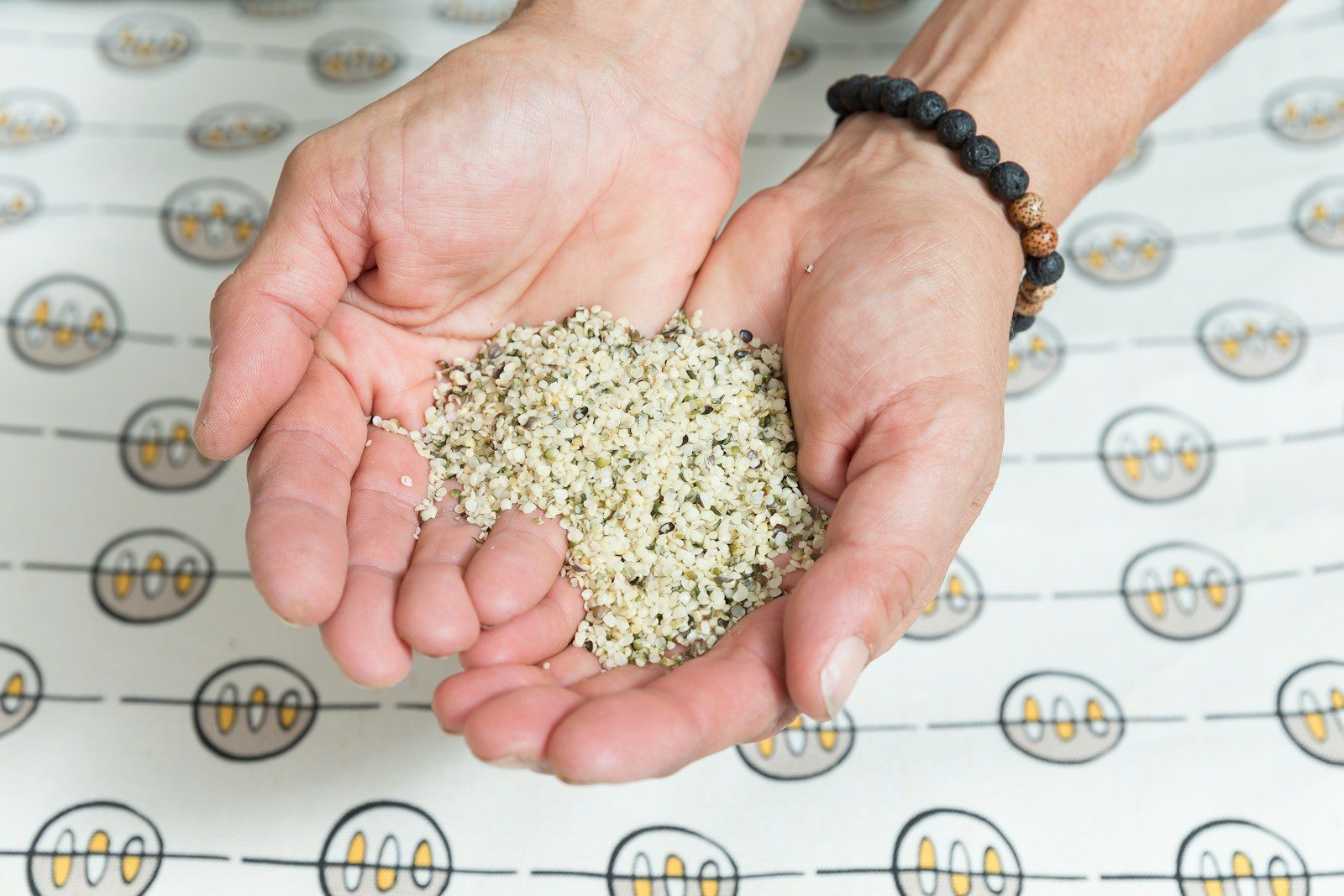
    • Hemp seed oil is cold-pressed from the seeds of the hemp plant. According to the FDA, hemp seeds don’t naturally contain THC, and the hemp seed ingredients it reviewed contained only trace amounts of THC and CBD picked up from other parts of the plant during harvesting. It’s a nutritious culinary oil, rich in polyunsaturated fats, and a popular skincare ingredient.
    • CBD oil is made by extracting cannabidiol (CBD) from the flowers and leaves of the hemp plant, then mixing that extract with a carrier oil such as MCT (coconut) oil, olive oil, or sometimes hemp seed oil.

    In other words, hemp seed oil can be an ingredient in a CBD product, but hemp seed oil on its own is not CBD.

    Why the labels are so confusing

    Part of the confusion is honest: “hemp oil” can mean different things to different people. But part of it is marketing. Some large online marketplaces have restricted CBD listings, so some sellers list hemp seed oil with vague, wellness-style claims and large milligram numbers. A label that says “50,000 mg hemp oil” usually means the bottle contains 50,000 mg of oil, not 50,000 mg of CBD.

    There’s nothing wrong with hemp seed oil itself. The problem is paying CBD prices, or expecting CBD effects, for a product that doesn’t contain meaningful CBD.

    How to tell what you’re buying

    1. Read the ingredient list

    If the only hemp ingredient is “hemp seed oil” or “Cannabis sativa seed oil,” it isn’t a CBD product. Real CBD products list ingredients like “hemp extract,” “cannabidiol (CBD),” “CBD isolate,” or “broad-spectrum hemp extract.”

    2. Look for a CBD amount in milligrams

    A CBD product should state how many milligrams of CBD are in the whole bottle and in each serving. Vague phrases like “hemp extract 20,000 mg” with no CBD figure are a red flag.

    3. Check the lab report

    Reputable CBD brands publish a Certificate of Analysis (COA) from an independent lab showing the CBD content for your batch. Hemp seed oil products usually don’t have a cannabinoid COA at all. New to lab reports? Read How to Read a CBD Lab Report in 2 Minutes.

    4. Sanity-check the price

    Quality CBD costs money to extract and test. If a bottle claims enormous potency for a very low price, it’s almost certainly hemp seed oil.

    Why we rated this “Strong”: The difference between hemp seed oil and CBD extract is well established. The FDA has publicly stated that hemp seeds don’t naturally contain THC and that the hemp seed ingredients it reviewed contained only trace cannabinoids. How we rate evidence

    Is hemp seed oil worth buying?

    Absolutely, for the right reasons. Hemp seed oil is a good source of polyunsaturated fats, including omega-6 and omega-3 fatty acids, and it has a mild, nutty flavor that works in salad dressings and drizzled over finished dishes. Because it’s delicate, it’s best not used for high-heat cooking. It’s also a common moisturizing ingredient in skincare. Just buy it as what it is: a seed oil, not a CBD supplement.

    What about the new hemp law?

    Under the federal hemp rules taking effect December 11, 2026, finished hemp products are limited to 0.4 milligrams of total THC per container. Hemp seed foods aren’t the main target of the new law, but CBD buyers should check THC on their lab reports. Read What December 11 Means for the CBD in Your Cabinet.

    Cleaner swaps to try

    We may earn a commission if you buy through links in our product picks. It never affects our ratings.

    • If you want CBD: a product that lists CBD in milligrams per serving, with a recent third-party COA for your batch.
    • If you want hemp seed oil for food: a cold-pressed, food-grade hemp seed oil, stored in a dark bottle and kept in the fridge after opening.
    • For skin: a simple hemp seed oil moisturizer without added fragrance.

    The bottom line

    Hemp seed oil and CBD oil are not the same thing. Hemp seed oil is a useful food and skincare oil with little to no CBD; CBD oil is an extract from the flowers and leaves. Read the ingredients, look for a CBD amount in milligrams, and check the lab report before you pay CBD prices. More guides in CBD & Botanicals.

    Want one evidence-checked story and three easy swaps every week? Subscribe to our free newsletter.

    Sources

    1. U.S. Food and Drug Administration. FDA Responds to Three GRAS Notices for Hemp Seed-Derived Ingredients for Use in Human Food. December 20, 2018.
    2. U.S. Food and Drug Administration. What You Need to Know About Products Containing Cannabis or Cannabis-Derived Compounds, Including CBD.
    3. Minnesota Department of Agriculture. Hemp-derived products including oil, flour, and seeds.
  • How to Read a CBD Lab Report (COA) in 2 Minutes

    How to Read a CBD Lab Report (COA) in 2 Minutes

    Evidence: Strong

    Key takeaways

    • A Certificate of Analysis (COA) is an independent lab report showing what’s actually in a CBD product. No COA? Don’t buy it.
    • In a well-known study of 84 CBD products sold online, only about 31% contained the amount of CBD their labels claimed, and about 1 in 5 contained THC.
    • Check six things: the lab, the batch number, the test date, the CBD amount, total THC and the contaminant panel.
    • After December 11, 2026, total THC must be under 0.4 mg for the whole container to count as legal hemp.

    A CBD lab report, usually called a Certificate of Analysis or COA, is the single best tool you have for judging a CBD product. It tells you what’s really in the bottle, not just what the label claims. It looks technical, but once you know where to look, you can read one in about two minutes.

    Here’s exactly what to check, line by line, and the red flags that should make you put the product back.

    Why the lab report matters

    CBD products aren’t approved or routinely checked by the FDA the way medicines are, and quality varies widely. In a study published in JAMA in 2017, researchers tested 84 CBD products bought online from 31 companies. Only about 31% contained an amount of CBD within 10% of what the label said. About 43% contained more CBD than labeled, about 26% contained less, and THC was detected in 18 products, about 1 in 5.

    A COA from an independent lab is how a reputable company shows you the product actually matches its label.

    Where to find a COA

    • A QR code on the package or bottle
    • A “Lab Results” or “Third-Party Testing” page on the brand’s website
    • By emailing the company. A reputable brand will send it quickly.

    If a company can’t or won’t share a COA for the batch you’re buying, that’s your answer.

    How to read a CBD lab report: 6 things to check

    1. Who did the testing

    The report should come from an independent, third-party lab, not the brand itself. Look for the lab’s name, address and an accreditation such as ISO/IEC 17025, the international standard for testing laboratories. You can search the lab’s name online to confirm it exists.

    2. The batch or lot number

    The batch number on the COA should match the number printed on your package. A report for a different batch tells you nothing about the bottle in your hand.

    3. The test date

    Look for a recent test, ideally within the past 12 months. Very old reports can be a sign that a brand isn’t testing each new batch.

    4. The CBD amount (potency)

    Find the cannabinoid results and compare the CBD amount to the label. Results may be listed in mg/mL, mg/g or as a percentage. The number should be close to what the label claims. The JAMA study used within 10% as “accurately labeled,” which is a useful benchmark.

    5. Total THC

    Check that THC matches the product type: none or non-detectable for isolate and broad-spectrum, small amounts for full-spectrum. Under the new federal hemp rules, total THC must be under 0.4 milligrams for the entire container starting December 11, 2026. To check, multiply the THC per mL by the bottle size. For example, 0.1 mg/mL × 30 mL = 3 mg, which is well over the limit. Read more in What December 11 Means for the CBD in Your Cabinet.

    6. The contaminant panel

    A complete COA includes a “full panel” showing passing results for:

    • Heavy metals such as lead, arsenic, cadmium and mercury
    • Pesticides
    • Residual solvents left over from extraction
    • Microbials such as mold, yeast and bacteria
    • Mycotoxins, toxic compounds produced by some molds

    A report that only lists cannabinoids, with no contaminant testing, is incomplete.

    Why we rated this “Strong”: The labeling problems described here come from a peer-reviewed study in JAMA, and the checklist reflects standard lab-testing practice. Keep in mind that the study is from 2017; product quality may have changed since, which is exactly why checking the COA for your batch matters. How we rate evidence

    Red flags on a CBD lab report

    • The COA is from the brand’s own lab, or the lab can’t be found online
    • The batch number doesn’t match your package
    • The report is more than a year old
    • CBD is far off from the label
    • THC appears in a product sold as “THC-free”
    • No contaminant results at all
    • Pages look edited, blurred or cut off

    Quick checklist

    1. Independent, accredited lab?
    2. Batch number matches?
    3. Tested within the last year?
    4. CBD close to the label?
    5. Total THC right for the product, and under 0.4 mg per container?
    6. Full contaminant panel passed?

    If you can answer yes to all six, you’re looking at a product that’s been properly tested. Next, make sure it’s actually CBD and not hemp seed oil: read Hemp Seed Oil vs. CBD Oil.

    The bottom line

    Labels can be wrong, and research shows they often are. A recent, independent COA that matches your batch is the best proof that a CBD product contains what it claims and nothing it shouldn’t. It takes two minutes to check, and it’s the habit that protects you most. More guides in our CBD & Botanicals section.

    This article is for education only and isn’t medical advice. Talk to your doctor before using CBD, especially if you take medications.

    Sources

    1. Bonn-Miller MO, Loflin MJE, Thomas BF, et al. Labeling Accuracy of Cannabidiol Extracts Sold Online. JAMA. 2017;318(17):1708–1709.
    2. U.S. Food and Drug Administration. What You Need to Know About Products Containing Cannabis or Cannabis-Derived Compounds, Including CBD.
    3. International Organization for Standardization. ISO/IEC 17025: Testing and calibration laboratories.
    4. The Washington Times. Synthetic hemp cannabinoids now illegal under federal law. November 13, 2026.