Evidence: Moderate
Key takeaways
- Most nonstick pans use PTFE, a type of PFAS. PFOA, a related chemical once used to make it, was phased out of U.S. production by 2015.
- Modern nonstick is generally considered safe at normal cooking temperatures, but overheating an empty pan can release fumes.
- Cast iron and stainless steel contain no PFAS coatings and can last for decades.
- Matching each pan to the job is the easiest way to cook cleaner without giving up convenience.
Choosing non-toxic cookware can feel confusing: nonstick, ceramic, cast iron, stainless steel. Each has trade-offs. Here’s what the evidence says about the most common options, so you can pick pans that fit how you cook.
Nonstick (PTFE): convenient, with caveats
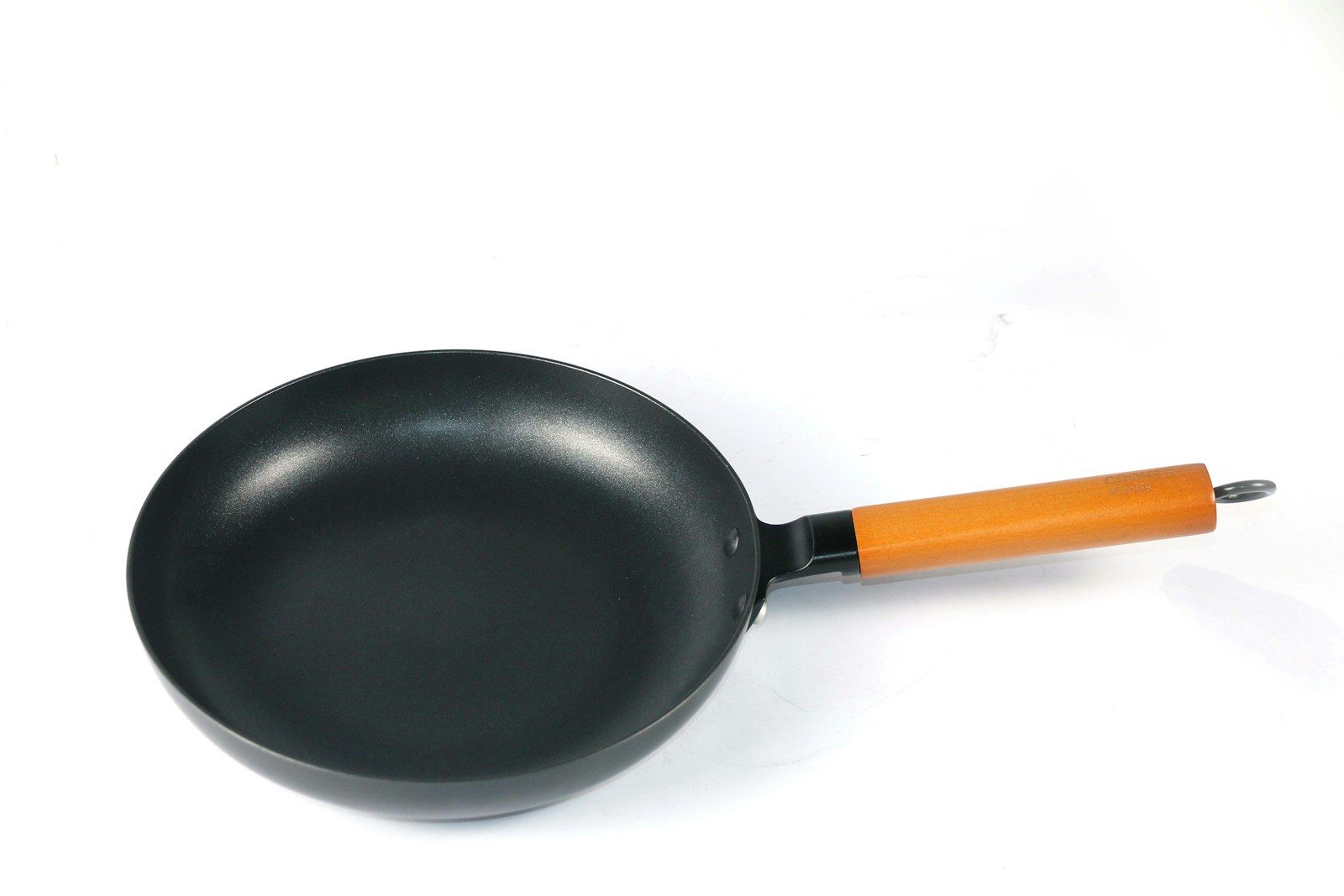
Traditional nonstick pans are coated with PTFE (polytetrafluoroethylene), often known by the brand name Teflon. PTFE belongs to the PFAS family of “forever chemicals.” For decades, a related chemical, PFOA, was used to make it. According to the American Cancer Society, PFOA was phased out of U.S. production by 2015. In 2023, WHO’s cancer agency classified PFOA as carcinogenic to humans, as reported in The Lancet Oncology.
PTFE itself is very stable at normal cooking temperatures. The main risk is overheating: an empty pan on high heat can get hot enough for the coating to break down and release fumes that can cause temporary flu-like symptoms in people and can be deadly to pet birds. Scratched, flaking pans are also a sign it’s time to replace them. Even “PFOA-free” nonstick is still a PFAS product, which matters to people trying to reduce PFAS overall. Learn more in our PFAS guide.
Ceramic nonstick
“Ceramic” pans usually have a silica-based coating made without PTFE. They avoid PFAS coatings, but the slick surface tends to wear out faster than PTFE, so they may need replacing more often. Look for brands that clearly say what the coating is made of.
Cast iron: a non-toxic workhorse
Cast iron has no synthetic coating. Once seasoned with oil, it becomes naturally slick and can last for generations. It holds heat well for searing and baking, and it can add small amounts of iron to food. Downsides: it’s heavy, needs drying and occasional re-seasoning, and long simmering of acidic foods like tomato sauce can affect flavor and seasoning. Enameled cast iron avoids those issues but costs more.
Stainless steel
Stainless steel is durable, oven-safe and coating-free, making it a favorite for sautéing, sauces and boiling. Food sticks more easily, so preheating the pan and adding oil before food helps. People with a nickel allergy may want to know that stainless steel contains small amounts of nickel.
Why we rated this “Moderate”: Health agencies agree PFOA is a concern and that overheating PTFE produces harmful fumes, but evidence on health effects from normal use of modern nonstick pans is limited. How we rate evidence
How to choose (and use) cleaner cookware
- Use a mix: cast iron for searing, stainless steel for sauces and boiling, and one nonstick or ceramic pan for eggs.
- Never preheat nonstick empty on high heat, and run the vent fan.
- Replace scratched or flaking nonstick pans.
- Use wood or silicone utensils on coated pans.
- Keep pet birds out of the kitchen when using nonstick.
Cleaner swaps to try
We may earn a commission if you buy through links in our product picks. It never affects our ratings.
- A 10–12 inch cast iron skillet
- A tri-ply stainless steel sauté pan
- A ceramic-coated pan for eggs
- Wooden spatulas and spoons
Related reading
The bottom line
You don’t need to throw out every pan today. Use nonstick gently and replace it when it’s worn, and lean on cast iron and stainless steel for everyday cooking. More ideas in Swaps and our microplastics guide.
Want one evidence-checked story and three easy swaps every week? Subscribe to our free newsletter.
Sources
- American Cancer Society. Teflon and Perfluorooctanoic Acid (PFOA).
- Zahm S, et al. Carcinogenicity of perfluorooctanoic acid and perfluorooctanesulfonic acid. The Lancet Oncology. 2024;25(1):16-17.
- U.S. Environmental Protection Agency. Per- and Polyfluoroalkyl Substances (PFAS).