Cleaner choices, backed by evidence. New issue of the newsletter every Thursday. Subscribe free

Author: Naturally Proven Editors

  • Hidden Sugar: How to Spot Its Many Names on a Label

    Hidden Sugar: How to Spot Its Many Names on a Label

    Evidence: Strong

    Key takeaways

    • Added sugar goes by many names on ingredient lists, from cane juice to maltodextrin to “nectar.”
    • The Nutrition Facts label now shows Added Sugars on its own line. That’s the fastest way to check.
    • The FDA’s Daily Value for added sugars is 50 grams; the American Heart Association recommends less: about 25 grams for most women and 36 grams for most men.
    • Sugar hides in “savory” foods too, like sauces, bread, dressings and flavored yogurt.

    Food makers don’t always call sugar “sugar.” It can appear on an ingredient list under many different names, and a single product may contain several of them. Learning the hidden names for sugar takes a minute and changes how you read every label.

    Start with the Added Sugars line

    The quickest check is the Nutrition Facts panel. According to the FDA, labels now list Added Sugars separately from total sugars, with a % Daily Value based on a limit of 50 grams a day. Added sugars include sugars added during processing, sugar syrups and honey, and the sugar in concentrated fruit or vegetable juices beyond what you’d get from the same amount of whole juice.

    The American Heart Association recommends a stricter limit: no more than about 6 teaspoons (25 grams) a day for most women and 9 teaspoons (36 grams) for most men.

    The many names of added sugar

    Anything with “sugar”

    • Cane sugar, beet sugar, brown sugar, coconut sugar, date sugar, raw sugar, invert sugar, powdered sugar

    Syrups

    • Corn syrup, high-fructose corn syrup, rice syrup, brown rice syrup, malt syrup, maple syrup, carob syrup, golden syrup, agave syrup

    Words ending in “-ose”

    • Sucrose, glucose, dextrose, fructose, maltose, lactose (when added), galactose

    Nectars, juices and “natural” sweeteners

    • Agave nectar, fruit juice concentrate, evaporated cane juice, cane juice crystals, honey, molasses, treacle

    Others that are easy to miss

    • Maltodextrin, dextrin, barley malt, caramel, panela, muscovado, turbinado, sorghum

    A useful trick: ingredients are listed by weight. If a product splits its sugar into several different names, each one may appear lower on the list than sugar would if it were combined.

    Why we rated this “Strong”: Added sugar labeling rules come from the FDA, and the recommended limits come from the American Heart Association. Evidence linking high added sugar intake to weight gain, tooth decay and heart and metabolic risks is well established. How we rate evidence

    Where hidden sugar shows up

    • Flavored yogurt and plant-based milks
    • Granola, cereal and “protein” bars
    • Pasta sauce, ketchup, barbecue sauce and salad dressing
    • Bread, wraps and crackers
    • Coffee drinks, sports drinks and bottled teas

    Many of these are ultra-processed foods. See 10 Pantry Swaps That Cut Ultra-Processed Foods for easy replacements.

    Are “natural” sugars better?

    Honey, maple syrup, coconut sugar and agave may sound healthier, but your body handles them much like regular sugar, and they all count as added sugar on the label. The sugar naturally found in whole fruit and plain milk isn’t counted as added sugar, and whole fruit comes with fiber and water that slow you down.

    Cleaner swaps to try

    We may earn a commission if you buy through links in our product picks. It never affects our ratings.

    • Instead of flavored yogurt: plain yogurt with fresh fruit
    • Instead of bottled dressing: a quick olive oil and vinegar vinaigrette
    • Instead of sweetened plant milk: the “unsweetened” version
    • Instead of sweetened cereal: plain oats with cinnamon and berries

    The bottom line

    Sugar hides behind dozens of names, but you don’t need to memorize them all. Check the Added Sugars line first, watch for syrups, “-ose” words and nectars on the ingredient list, and pay extra attention to sauces, bars and drinks. More label skills in our Ingredient Decoder, including how to read a supplement label.

    Want one evidence-checked story and three easy swaps every week? Subscribe to our free newsletter.

    Sources

    1. U.S. Food and Drug Administration. Added Sugars on the Nutrition Facts Label.
    2. American Heart Association. How Much Sugar Is Too Much?.
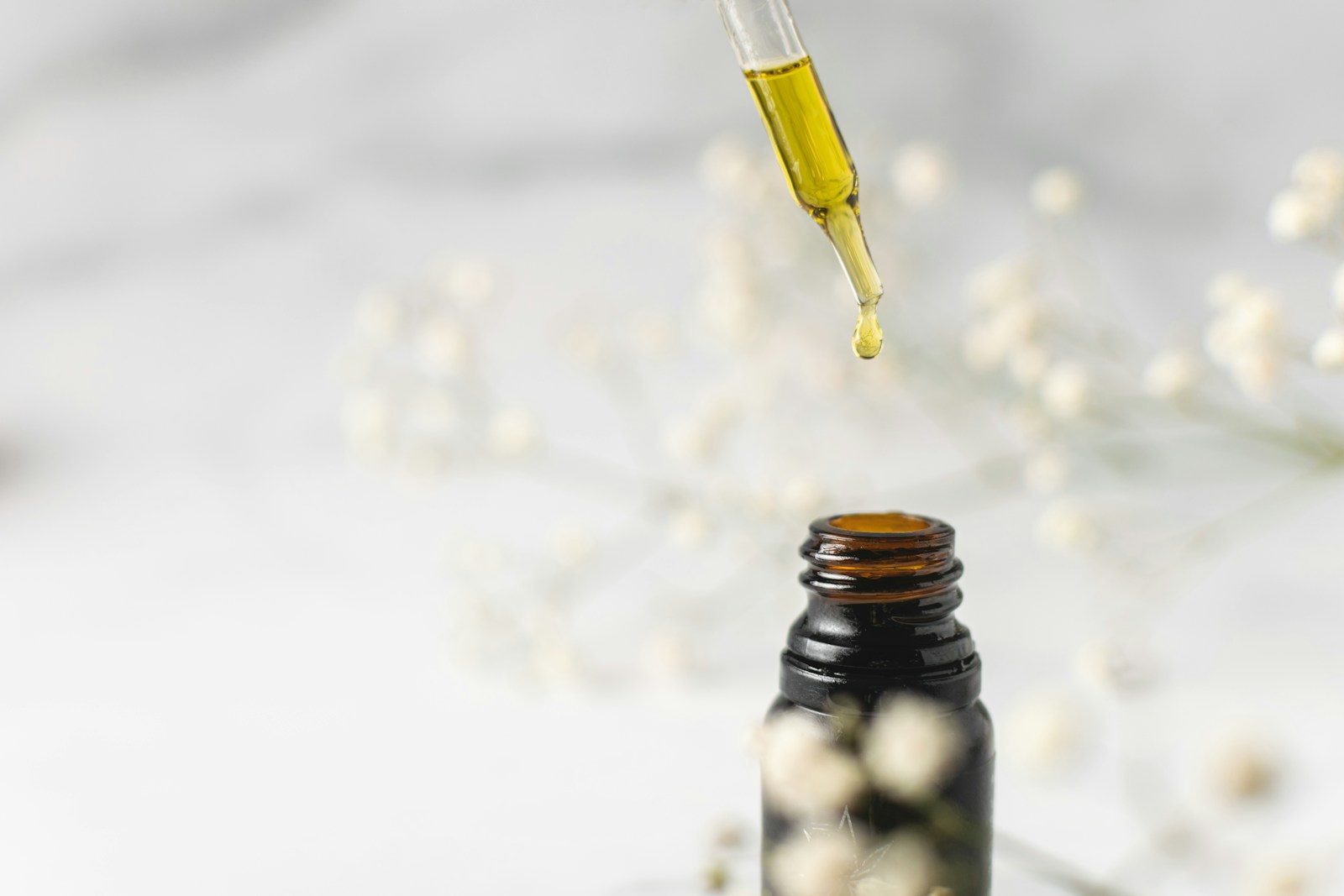
  • What December 11 Means for the CBD in Your Cabinet

    What December 11 Means for the CBD in Your Cabinet

    Evidence: Strong

    Key takeaways

    • A federal law passed in November 2025 redefines legal hemp. Most of the changes take effect on December 11, 2026.
    • After that date, finished hemp products can contain no more than 0.4 milligrams of total THC per container. Most full-spectrum CBD products are expected to exceed that.
    • CBD isolate and verified THC-free broad-spectrum products are the most likely to stay federally legal.
    • Congress is still debating changes, and state laws differ, so check your product’s lab report and your state’s rules.

    If you use CBD, the rules are about to change. A federal law passed in November 2025 rewrote the legal definition of hemp, and most of the new limits take effect on December 11, 2026. Industry groups say the change will affect the large majority of hemp products on store shelves, including many CBD oils, gummies and creams that people use every day.

    Here’s what the new hemp law actually says, which CBD products are likely to stay legal, and how to check the bottle in your cabinet.

    What changed in the hemp law?

    Since the 2018 Farm Bill, hemp has been federally legal as long as it contained no more than 0.3% delta-9 THC by dry weight. That rule made CBD widely available, but it also created a loophole that let intoxicating products like delta-8 gummies and hemp THC drinks be sold almost anywhere.

    In November 2025, Congress closed that loophole in a federal spending bill. The changes are rolling out in two phases:

    • November 12, 2026 (already in effect): cannabinoids the hemp plant can’t naturally produce, such as lab-made synthetic compounds, are no longer legal hemp.
    • December 11, 2026: hemp must contain no more than 0.3% total THC, including THCA, and finished products are capped at 0.4 milligrams of total THC per container. Products above that are treated as marijuana under federal law.

    The December date was originally November 12. Congress pushed it back in a stopgap funding bill signed in September 2026, as The Washington Times reports.

    Why 0.4 milligrams matters so much

    The key detail is that the limit applies to the whole container, not each serving. That’s a very small amount. The U.S. Hemp Roundtable, an industry group, estimates the per-container cap would effectively ban around 95% of hemp products on the market.

    Full-spectrum CBD is the type most affected. It contains trace THC by design, and those trace amounts usually add up to more than 0.4 milligrams in a full bottle. As one cannabis attorney told Forbes, companies making full-spectrum CBD will have to reformulate to broad-spectrum or isolate products, or stop selling.

    Which CBD products are likely to stay legal?

    • CBD isolate (pure CBD with no THC): likely to remain federally legal.
    • Broad-spectrum CBD (THC removed): likely legal if the lab report shows total THC under 0.4 mg for the entire container.
    • Full-spectrum CBD (contains trace THC): most products will not qualify.
    • Delta-8, delta-10, THCA and hemp THC gummies or drinks: no longer federally legal as hemp. Where allowed, they move to state-licensed cannabis stores.
    • CBD topicals (creams, balms): the same per-container rule applies. THC-free topicals should be fine; full-spectrum ones may not be.

    Not sure what type you have? Our guide to hemp seed oil vs. CBD oil explains the labels.

    How to check the CBD in your cabinet

    You can figure out whether a product meets the new limit in about a minute using its lab report, called a Certificate of Analysis or COA. Reputable brands post COAs online or link to them with a QR code on the package.

    1. Find the COA for your batch. The batch or lot number on the report should match the one on your bottle.
    2. Look for total THC in the cannabinoid results. It may be listed per milliliter, per gram or per serving.
    3. Multiply by the size of the container. For example, a 30 mL bottle that tests at 0.1 mg of THC per mL contains 3 mg of THC, more than seven times the 0.4 mg limit.
    4. If THC shows as “ND” (non-detect), ask the brand what the lab’s detection limit was.

    New to lab reports? Read How to Read a CBD Lab Report in 2 Minutes.

    Why we rated this “Strong”: The dates and limits in this article come from the enacted federal law and current reporting from legal and news sources. What’s still uncertain is whether Congress will change the rules again, and how strictly they’ll be enforced. How we rate evidence

    Could the rules still change?

    Yes. Lawmakers are debating bills that would delay the ban or replace it with a regulatory framework, according to Marijuana Moment. The December 11 deadline also lines up with a government funding deadline, which gives Congress a chance to act. Some states have also moved ahead with their own, stricter rules, as NPR reports.

    We’ll update this article if anything changes. Subscribe to our free newsletter to get updates as they happen.

    What should you do now?

    • Check your current products’ lab reports using the steps above.
    • If you rely on full-spectrum CBD, look at broad-spectrum or isolate options with clear lab reports.
    • Check your state’s rules, especially if you travel with CBD.
    • Talk to your doctor before switching products if you use CBD alongside medications.

    The bottom line

    CBD itself isn’t being banned, but the THC limits are strict enough that many products will disappear or change after December 11, 2026. THC-free isolate and verified broad-spectrum products are the safest bets. Check your lab reports, follow the news, and don’t assume last year’s product still meets this year’s rules.

    This article is for general information and is not legal advice. Laws vary by state and may change.

    Sources

    1. The Washington Times. Synthetic hemp cannabinoids now illegal under federal law. November 13, 2026.
    2. Hemp Law Group. Federal Hemp Ban 2026: Where Things Stand. November 2026.
    3. Forbes. What Dec. 11 Means for the Hemp Products on Your Store Shelves. November 12, 2026.
    4. Marijuana Moment. First Phase of Renewed Federal Hemp Product Ban Takes Effect. November 2026.
    5. NPR. Some states get a head start on upcoming federal hemp ban. November 12, 2026.
    6. U.S. Congress. H.R. 5371, Continuing Appropriations Act, 2026.
  • How to Read a CBD Lab Report (COA) in 2 Minutes

    How to Read a CBD Lab Report (COA) in 2 Minutes

    Evidence: Strong

    Key takeaways

    • A Certificate of Analysis (COA) is an independent lab report showing what’s actually in a CBD product. No COA? Don’t buy it.
    • In a well-known study of 84 CBD products sold online, only about 31% contained the amount of CBD their labels claimed, and about 1 in 5 contained THC.
    • Check six things: the lab, the batch number, the test date, the CBD amount, total THC and the contaminant panel.
    • After December 11, 2026, total THC must be under 0.4 mg for the whole container to count as legal hemp.

    A CBD lab report, usually called a Certificate of Analysis or COA, is the single best tool you have for judging a CBD product. It tells you what’s really in the bottle, not just what the label claims. It looks technical, but once you know where to look, you can read one in about two minutes.

    Here’s exactly what to check, line by line, and the red flags that should make you put the product back.

    Why the lab report matters

    CBD products aren’t approved or routinely checked by the FDA the way medicines are, and quality varies widely. In a study published in JAMA in 2017, researchers tested 84 CBD products bought online from 31 companies. Only about 31% contained an amount of CBD within 10% of what the label said. About 43% contained more CBD than labeled, about 26% contained less, and THC was detected in 18 products, about 1 in 5.

    A COA from an independent lab is how a reputable company shows you the product actually matches its label.

    Where to find a COA

    • A QR code on the package or bottle
    • A “Lab Results” or “Third-Party Testing” page on the brand’s website
    • By emailing the company. A reputable brand will send it quickly.

    If a company can’t or won’t share a COA for the batch you’re buying, that’s your answer.

    How to read a CBD lab report: 6 things to check

    1. Who did the testing

    The report should come from an independent, third-party lab, not the brand itself. Look for the lab’s name, address and an accreditation such as ISO/IEC 17025, the international standard for testing laboratories. You can search the lab’s name online to confirm it exists.

    2. The batch or lot number

    The batch number on the COA should match the number printed on your package. A report for a different batch tells you nothing about the bottle in your hand.

    3. The test date

    Look for a recent test, ideally within the past 12 months. Very old reports can be a sign that a brand isn’t testing each new batch.

    4. The CBD amount (potency)

    Find the cannabinoid results and compare the CBD amount to the label. Results may be listed in mg/mL, mg/g or as a percentage. The number should be close to what the label claims. The JAMA study used within 10% as “accurately labeled,” which is a useful benchmark.

    5. Total THC

    Check that THC matches the product type: none or non-detectable for isolate and broad-spectrum, small amounts for full-spectrum. Under the new federal hemp rules, total THC must be under 0.4 milligrams for the entire container starting December 11, 2026. To check, multiply the THC per mL by the bottle size. For example, 0.1 mg/mL × 30 mL = 3 mg, which is well over the limit. Read more in What December 11 Means for the CBD in Your Cabinet.

    6. The contaminant panel

    A complete COA includes a “full panel” showing passing results for:

    • Heavy metals such as lead, arsenic, cadmium and mercury
    • Pesticides
    • Residual solvents left over from extraction
    • Microbials such as mold, yeast and bacteria
    • Mycotoxins, toxic compounds produced by some molds

    A report that only lists cannabinoids, with no contaminant testing, is incomplete.

    Why we rated this “Strong”: The labeling problems described here come from a peer-reviewed study in JAMA, and the checklist reflects standard lab-testing practice. Keep in mind that the study is from 2017; product quality may have changed since, which is exactly why checking the COA for your batch matters. How we rate evidence

    Red flags on a CBD lab report

    • The COA is from the brand’s own lab, or the lab can’t be found online
    • The batch number doesn’t match your package
    • The report is more than a year old
    • CBD is far off from the label
    • THC appears in a product sold as “THC-free”
    • No contaminant results at all
    • Pages look edited, blurred or cut off

    Quick checklist

    1. Independent, accredited lab?
    2. Batch number matches?
    3. Tested within the last year?
    4. CBD close to the label?
    5. Total THC right for the product, and under 0.4 mg per container?
    6. Full contaminant panel passed?

    If you can answer yes to all six, you’re looking at a product that’s been properly tested. Next, make sure it’s actually CBD and not hemp seed oil: read Hemp Seed Oil vs. CBD Oil.

    The bottom line

    Labels can be wrong, and research shows they often are. A recent, independent COA that matches your batch is the best proof that a CBD product contains what it claims and nothing it shouldn’t. It takes two minutes to check, and it’s the habit that protects you most. More guides in our CBD & Botanicals section.

    This article is for education only and isn’t medical advice. Talk to your doctor before using CBD, especially if you take medications.

    Sources

    1. Bonn-Miller MO, Loflin MJE, Thomas BF, et al. Labeling Accuracy of Cannabidiol Extracts Sold Online. JAMA. 2017;318(17):1708–1709.
    2. U.S. Food and Drug Administration. What You Need to Know About Products Containing Cannabis or Cannabis-Derived Compounds, Including CBD.
    3. International Organization for Standardization. ISO/IEC 17025: Testing and calibration laboratories.
    4. The Washington Times. Synthetic hemp cannabinoids now illegal under federal law. November 13, 2026.
  • Ultra-Processed Foods: What the Biggest Review Yet Actually Found

    Ultra-Processed Foods: What the Biggest Review Yet Actually Found

    Evidence: Strong

    Key takeaways

    • A 2024 umbrella review in The BMJ pooled 45 analyses covering almost 10 million people.
    • Eating more ultra-processed foods was consistently linked to higher risk of heart-disease death, type 2 diabetes, anxiety, depression and early death.
    • These studies show strong associations, not absolute proof of cause, but a controlled trial also found ultra-processed diets lead people to eat more and gain weight.
    • You don’t need a perfect diet. Swapping the ultra-processed foods you eat most often is the most practical place to start.

    Ultra-processed foods make up a large share of what many Americans eat every day: packaged snacks, sugary cereals, soft drinks, frozen ready meals and fast food. For years researchers have suspected these foods are bad for health. In 2024, the largest review of the evidence so far put numbers on that suspicion, and the pattern was hard to ignore.

    Here’s what the researchers found, how strong the evidence really is, and what it means for your grocery cart.

    What are ultra-processed foods?

    Most food is processed in some way. Frozen vegetables, canned beans and plain yogurt are all processed, and that’s fine. Ultra-processed foods are different. Researchers commonly use a system called NOVA, which sorts foods into four groups by how much they’ve been industrially changed. Ultra-processed foods sit in the last group.

    They’re industrial formulations, typically made from extracted or modified ingredients like refined starches, sugars, oils and protein isolates, plus additives such as colors, emulsifiers, flavors and sweeteners. According to The BMJ, these products tend to be high in added sugar, fat and salt and low in vitamins and fiber.

    Common examples

    • Soft drinks and sweetened juice drinks
    • Packaged chips, cookies and snack cakes
    • Sugary breakfast cereals and cereal bars
    • Instant noodles and many frozen ready meals
    • Hot dogs, chicken nuggets and other reconstituted meats
    • Many flavored yogurts, packaged breads and pastries

    A quick rule of thumb: if the ingredient list includes things you wouldn’t find in a home kitchen, such as hydrogenated oils, maltodextrin, “natural flavors” or long chemical names, it’s probably ultra-processed. Our Ingredient Decoder breaks down what those names mean.

    What the biggest review found

    In February 2024, an international team published an umbrella review in The BMJ, one of the world’s leading medical journals. Instead of running one more study, they gathered 45 pooled analyses from 14 review articles, covering nearly 10 million participants, and graded how strong each link was.

    Higher intake of ultra-processed food was directly associated with 32 different health outcomes. The researchers rated the evidence as convincing for:

    • About a 50% higher risk of death from cardiovascular disease
    • A 48–53% higher risk of anxiety and common mental disorders
    • A 12% higher risk of type 2 diabetes

    They rated the evidence as highly suggestive for a 21% higher risk of death from any cause, a 40–66% higher risk of heart-disease-related death, obesity and sleep problems, and a 22% higher risk of depression.

    Notably, the review was not funded by companies involved in producing ultra-processed foods, according to the BMJ Group’s announcement.

    Why we rated this “Strong”: This is a large, peer-reviewed umbrella review in a top medical journal, with consistent results across many outcomes and millions of people, and a randomized trial (below) supports one likely mechanism. The limit: most of the underlying studies are observational, so they show associations rather than proof that ultra-processed food alone causes each outcome. How we rate evidence

    Does it prove ultra-processed foods cause harm?

    Not on its own, and the authors say so. Observational studies can’t rule out other factors. People who eat a lot of ultra-processed food may also sleep less, exercise less or have less access to fresh food. Some outside experts also noted that parts of the underlying research are weak.

    But there’s a reason researchers take the link seriously. In a tightly controlled 2019 trial at the U.S. National Institutes of Health, adults lived in a research clinic and ate either an ultra-processed diet or a minimally processed diet for two weeks each, eating as much as they wanted. On the ultra-processed diet, people ate roughly 500 more calories a day and gained weight. On the minimally processed diet, they lost weight. The meals offered were matched for calories, sugar, fat, fiber and salt.

    That doesn’t answer every question, but it shows one clear way these foods may affect health: they’re easy to overeat.

    What this means for your cart

    The goal isn’t zero. Ultra-processed foods are convenient and sometimes the only realistic option. The research points toward shifting the balance, especially for the foods you eat most often. Here’s a practical approach:

    1. Start with drinks. Swapping soda or sweetened drinks for water, sparkling water or unsweetened tea is one of the simplest, highest-impact changes.
    2. Fix your most frequent snack. Trade one daily packaged snack for fruit, nuts, plain yogurt or popcorn you make yourself.
    3. Read the ingredient list, not just the front of the box. Short lists with recognizable ingredients are a good sign. Our guide to decoding labels can help.
    4. Cook a few more meals from scratch. Even simple meals like eggs, rice and beans or a sheet-pan dinner are minimally processed.
    5. Keep easy staples on hand. Frozen vegetables, canned beans, oats and plain frozen fruit are processed, but not ultra-processed, and they make quick meals easier.
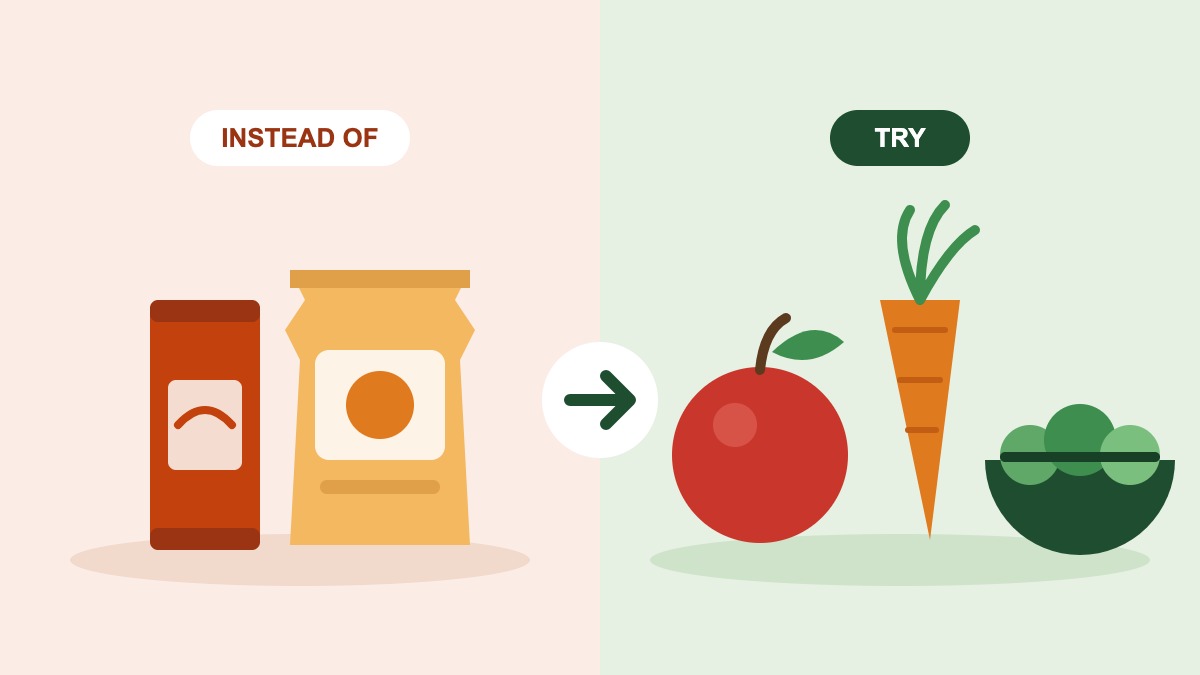
    Illustration: swap soda and chips for an apple, carrots and greens

    Cleaner swaps to try

    We may earn a commission if you buy through links in our product picks. It never affects our ratings.

    • Instead of flavored chips: air-popped popcorn with a little olive oil and salt
    • Instead of sweetened yogurt cups: plain yogurt with fresh or frozen fruit
    • Instead of sugary cereal: plain oats with cinnamon and fruit
    • Instead of soda: sparkling water with a squeeze of citrus

    More ideas in our Swaps section.

    The bottom line

    The largest review to date found consistent links between ultra-processed foods and dozens of health problems, from heart disease to anxiety, and a controlled trial suggests these foods make it easy to eat more than we need. You don’t need to be perfect. Focus on the ultra-processed foods you eat most often, swap a few for whole or minimally processed options, and build from there.

    Want one evidence-checked story and three easy swaps every week? Subscribe to our free newsletter.

    Sources

    1. Lane MM, Gamage E, Du S, et al. Ultra-processed food exposure and adverse health outcomes: umbrella review of epidemiological meta-analyses. BMJ. 2024;384:e077310.
    2. BMJ Group. Consistent evidence links ultra-processed food to over 30 damaging health outcomes. February 2024.
    3. Hall KD, Ayuketah A, Brychta R, et al. Ultra-processed diets cause excess calorie intake and weight gain: an inpatient randomized controlled trial of ad libitum food intake. Cell Metabolism. 2019;30(1):67–77.